The Most Common Reasons for Smog Check Failures
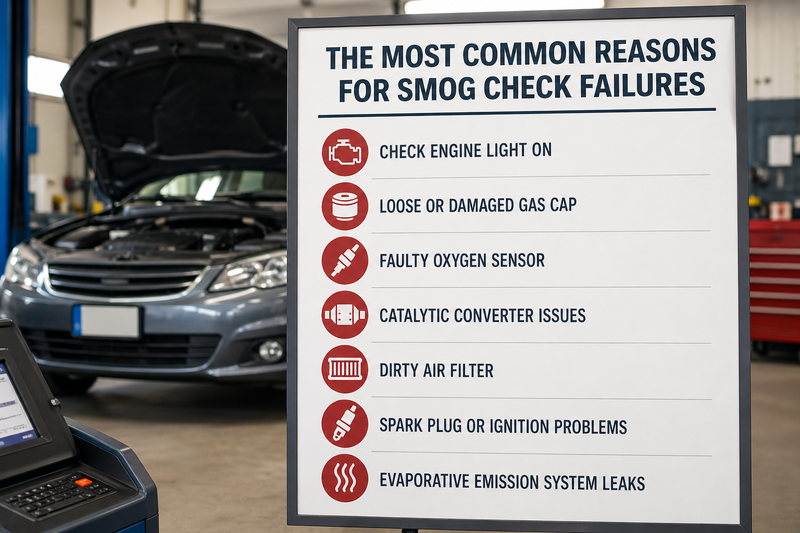
If your car fails a smog check, it can feel frustrating, inconvenient, and sometimes expensive. The reality is that most failures happen for a handful of predictable reasons. Once you understand what inspectors are looking for, you can often prevent a failure before it happens or fix the issue quickly if it does.
This guide breaks down the most common reasons vehicles fail smog tests in the United States, along with practical tips to help you pass the next time.
1. Check Engine Light Is On
This is the number one reason vehicles fail. No contest.
If your check engine light is illuminated, your car will automatically fail a smog test in most states. That’s because the onboard diagnostics system (OBD-II) has detected a problem affecting emissions.
Common triggers include:
Faulty oxygen sensors
Loose or damaged gas caps
Bad catalytic converters
Misfires or engine timing issues
Even if your car seems to run fine, that light is a dealbreaker.
What to do:
Get the code scanned. Many auto parts stores do this for free. Fix the issue, then drive the car enough to reset the system before testing.
2. Incomplete Drive Cycle (Not “Ready”)
Here’s a mistake many people make. Clearing the check engine light right before a test.
When codes are cleared, your vehicle’s emissions monitors reset. These monitors need time and specific driving conditions to run their checks again. If they are not “ready,” your car can fail automatically.
The Environmental Protection Agency explains that readiness monitors must complete self-tests before a vehicle can pass emissions inspection.
What to do:
After repairs or clearing codes:
Drive at highway speeds
Include stop-and-go traffic
Allow cold starts
Most vehicles need 50 to 100 miles of mixed driving to fully reset.
3. Faulty Oxygen Sensor
Oxygen sensors measure how much oxygen is in your exhaust and help regulate fuel efficiency. When they fail, your engine burns more fuel and produces higher emissions.
Symptoms include:
Poor gas mileage
Rough idling
Failed emissions readings
This is one of the most common and relatively affordable fixes.
What to do:
Replace the faulty sensor promptly. It is usually a straightforward repair and often restores emissions performance quickly.
4. Bad Catalytic Converter
The catalytic converter is the centerpiece of your emissions system. It converts harmful gases like carbon monoxide into less harmful substances before they exit your exhaust.
If it fails, your emissions increase and you will fail the test.
Signs of a failing converter:
Rotten egg smell from exhaust
Reduced engine performance
Rattling noises underneath the car
This is one of the more expensive repairs.
What to do:
If diagnosed, replacement is typically required. There is no reliable shortcut or temporary fix.
5. Loose or Damaged Gas Cap
This one surprises people because it seems minor, but it matters.
A loose or cracked gas cap can allow fuel vapors to escape, which increases emissions and triggers system errors.
What to do:
Tighten your gas cap until it clicks
Replace it if the seal is worn or damaged
It is one of the cheapest fixes on this list and can prevent an unnecessary failure.
6. Evaporative Emissions System (EVAP) Issues
The EVAP system captures fuel vapors and prevents them from escaping into the atmosphere. Problems here are very common and often tied to:
Cracked hoses
Faulty purge valves
Leaks in the system
These issues may not affect how your car drives, but they will show up during testing.
What to do:
A smoke test is often used to find leaks. Once identified, repairs are usually straightforward.
7. Old or Contaminated Engine Oil
Dirty oil can contribute to higher emissions because it releases more hydrocarbons as it breaks down.
While this alone may not always cause a failure, it can push borderline vehicles over the limit.
What to do:
Change your oil before your smog test, especially if you are close to your next scheduled service.
8. Worn Spark Plugs or Ignition Problems
Spark plugs ignite the air-fuel mixture in your engine. If they are worn or misfiring, combustion becomes inefficient, leading to higher emissions.
Symptoms include:
Rough engine performance
Poor acceleration
Increased fuel consumption
What to do:
Replace spark plugs according to your vehicle’s maintenance schedule. If there are ignition coil issues, those may also need attention.
9. Vacuum Leaks
Your engine relies on a sealed system to maintain proper air pressure. A vacuum leak introduces excess air, which disrupts the fuel mixture and increases emissions.
These leaks can be difficult to detect but are a known cause of smog failures.
What to do:
A mechanic can diagnose leaks using specialized tools. Fixing hoses or connections is usually inexpensive.
10. Aftermarket Modifications
Certain modifications can cause a vehicle to fail emissions testing, especially if they alter or bypass emissions controls.
Common problem modifications include:
Removing catalytic converters
Installing non-compliant exhaust systems
Engine tuning that increases emissions
What to do:
Make sure any modifications are emissions-compliant in your state. California, for example, has especially strict rules.
11. Engine Running Too Rich or Too Lean
Your engine needs the right balance of air and fuel. If that balance is off:
“Too rich” means too much fuel
“Too lean” means too much air
Either condition increases emissions and can lead to failure.
What to do:
This usually ties back to sensors, such as the mass airflow sensor, or fuel system issues. A diagnostic scan will pinpoint the cause.
12. Battery Disconnect or Recent Replacement
This one catches people off guard.
Disconnecting or replacing your battery resets your vehicle’s computer, which clears readiness monitors, just like clearing codes.
What to do:
Drive the vehicle normally for several days before testing to allow systems to reset.
How to Improve Your Chances of Passing
Now that you know the common failure points, here is how to improve your chances:
Before your test:
Make sure the check engine light is off
Drive at least 50 to 100 miles if repairs were done
Top off fluids and change oil if needed
Ensure tires are properly inflated
Warm up your engine before the test
Optional but helpful:
Get a pre-test inspection
Use a fuel system cleaner in some cases
Smog test failures are usually not random. In most cases, they come down to predictable mechanical or system issues that can be diagnosed and fixed.
The key is not to treat the test like a gamble. Treat it like a checkpoint. If your car is properly maintained and you give your onboard systems time to reset, your chances of passing go up significantly.
If you have already failed, focus on the root cause, fix it properly, and complete a full drive cycle before retesting. This approach saves time, money, and frustration.