Smog Check Station Advertising & Marketing: How to Get More Customers
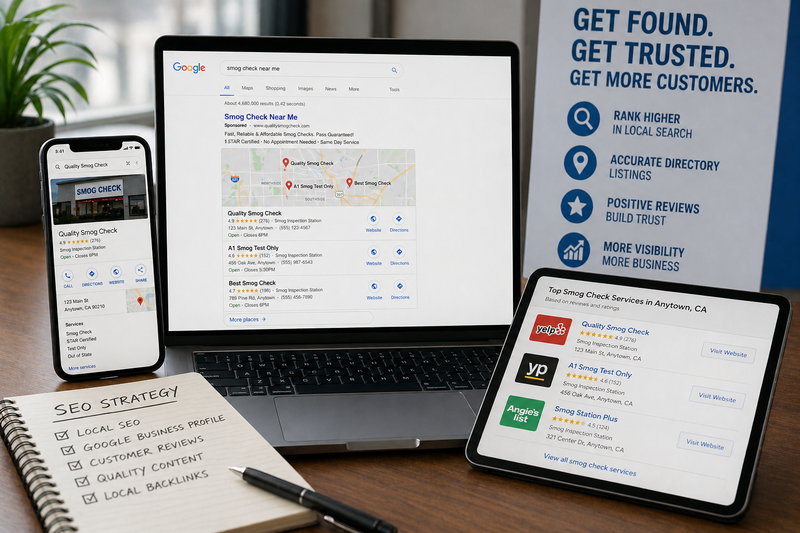
Running a smog check station is one thing. Getting a steady flow of customers is another.
A lot of station owners assume demand will always be there because smog checks are mandatory in many states. That’s partly true. People need inspections for registration renewals, title transfers, and compliance. But the real challenge is this: when someone searches for a smog station, they usually have multiple options.
That means visibility matters.
If your station isn’t showing up online, collecting reviews, running promotions, or building local trust, you’re leaving money on the table.
The good news is that smog check marketing does not have to be complicated. In fact, the most effective strategies are usually simple, local, and repeatable.
Why Marketing Matters for Smog Check Stations
A smog test is often a need-based purchase.
People usually search when:
Their registration renewal is due
They bought or sold a car
They received a DMV notice
They failed a previous test and need a retest
That means your marketing has to capture high-intent customers at the exact moment they’re searching.
Unlike other businesses, you do not need to “create demand.”
The demand already exists.
Your job is to capture it.
That’s why smog station marketing is less about branding and more about:
Local visibility
Trust
Convenience
Competitive pricing
1. Optimize Your Google Business Profile
If there’s one marketing move every smog station should make, it’s this.
Your Google Business Profile listing is one of your strongest customer acquisition tools.
When someone searches:
“smog check near me”
"smog test near me"
“STAR smog station near me”
“cheap smog test stations near me”
Google often shows local map results first.
If your listing is optimized, you have a real chance of winning that click.
Make sure your profile includes:
Correct business hours
Accurate phone number
Website link
Real photos of your station
Pricing if possible
Service details
Certifications
Pro tip: Add keywords naturally in your business description.
Example:
“Certified smog check station offering STAR smog inspections, test-only smog checks, and fast DMV-compliant emissions testing.”
2. Get More Reviews on Google and Social Media
Reviews directly influence customer decisions.
A smog check is usually transactional. People want:
Fast service
Honest/reasonable pricing
Friendly staff
No hassle
Reviews build trust instantly.
A station with 300 reviews will often beat a station with 20, even if prices are similar.
How to get more reviews:
Ask every happy customer
Use QR codes at checkout
Send text follow-ups
Put review reminders on receipts
The goal is consistency.
Even 5 new reviews per month adds up fast.
3. Run Local Search Ads
Google Ads can be highly effective because search intent is strong.
Someone typing “smog station open now” is likely ready to buy.
That’s valuable traffic.
Good ad keywords include:
Smog check near me
Cheap smog check
STAR smog station
Test only smog check
DMV smog inspection
Focus on a tight geographic radius around your shop.
There’s no reason to pay for clicks 20 miles away if most customers stay local.
4. Offer Coupons That Actually Work
Coupons are one of the oldest smog station marketing tactics because they work.
Customers compare pricing.
A simple offer like:
“$20 Off Smog Check”
can dramatically increase conversions.
Promote coupons on:
Your website
Google Business Profile
Social media
Local directories
The key is making redemption easy.
No complicated rules.
No confusing terms.
Simple wins.
5. Build a Local SEO Website
Your website should not just exist. It should rank.
A strong local website helps you show up for searches like:
Smog check in "city"
Smog test near "state"
STAR station nearby
Your site should include:
Service pages
Examples:
STAR smog checks
Regular smog inspections
Diesel smog testing
Location pages
Target nearby cities.
FAQ pages
Examples:
How long does a smog test take?
What causes smog test failure?
How much is a smog check?
This builds search traffic over time.
6. Use Facebook and Instagram for Local Awareness
A lot of smog station owners ignore social media.
That’s a mistake.
People still check social profiles for legitimacy.
Post content like:
Special discounts
Customer testimonials
Quick smog tips
Holiday hours
Registration reminders
Consistency matters more than perfection.
Two posts a week is enough.
7. Partner with Local Auto Businesses
Strategic partnerships can drive consistent referrals.
Good partners include:
Mechanic shops
Oil change centers
Tire shops
Car dealerships
Auto detailers
A mechanic may not do smog checks.
That’s your opportunity.
In return, you can refer repair work when customers fail.
Everyone wins.
8. Use Text Message Marketing
Most smog customers are repeat customers.
That’s an advantage.
Registration renewals come back.
Text reminders work extremely well.
Example:
“Your vehicle may be due for its next smog inspection. Schedule today and save $15.”
Text campaigns can:
Bring back old customers
Promote coupons
Fill slow days
Just make sure you follow communication consent rules.
9. Promote Speed as a Selling Point
Speed is one of the strongest selling points in this industry.
Many customers are on a time crunch.
Highlight things like:
15-minute smog checks
No appointment needed
Fast DMV compliance
This reduces hesitation.
People value convenience.
Sometimes more than price.
10. Create Educational Content
Content marketing sounds fancy, but it can be simple.
Write helpful articles like:
What causes smog test failures?
How to pass a smog test
What to do after failing a smog check
This positions your business as helpful and knowledgeable.
It also boosts local SEO.
A customer might find your article first, then choose your station.
That’s how content turns into revenue.
11. Claim Local Directory Listings
Beyond Google, make sure you’re listed on:
Smog-specific niche directories like ours
Yelp
Bing Places
Apple Maps
Nextdoor
Consistency matters.
Your business name, address, and phone number should match everywhere.
This helps local rankings.
12. Retarget Website Visitors
Not everyone books on the first visit.
Retargeting ads remind people you exist.
If someone visits your site but leaves, ads can follow them across:
Facebook
Instagram
Google display networks
This keeps your station top of mind.
13. Use Seasonal and Deadline Marketing
Smog checks often spike around registration deadlines.
Plan campaigns around:
DMV renewal seasons
End-of-month deadlines
Tax refund season
Messaging matters.
Examples:
Avoid last-minute DMV stress
Beat the registration deadline
Fast smog checks today
Urgency drives action.
14. Track Your Marketing Results
If you’re spending money on marketing, measure it.
Track:
Calls from Google Business Profile
Website visits
Coupon redemptions
Ad clicks
Review growth
Marketing without tracking is guesswork.
Simple data helps you focus on what works.
Common Marketing Mistakes Smog Stations Make
Avoid these:
Only competing on price
Cheap prices alone do not build loyalty.
Ignoring reviews
Bad or unanswered reviews hurt trust.
No website
Many customers check your site before visiting.
Poor local SEO
If competitors rank higher, they win.
No follow-up system
Past customers are valuable.
The Best Marketing Strategy for Most Smog Stations
If you’re wondering where to start, focus here first:
Optimize your Google Business Profile
Collect more reviews
Build local SEO pages
Run local Google Ads
Use simple coupon offers
Build referral partnerships
That combination covers the biggest traffic sources.
Smog station marketing is not about flashy campaigns or big budgets.
It’s about being visible when people need you.
That means showing up in search results, building trust through reviews, offering clear pricing, and making the customer experience simple.
The stations that grow are not always the cheapest.
They are usually the easiest to find, easiest to trust, and easiest to choose.
If you own a smog station, focus on those three things and your marketing will start doing what it’s supposed to do: bringing in cars consistently.
And in this business, consistent traffic is everything.